


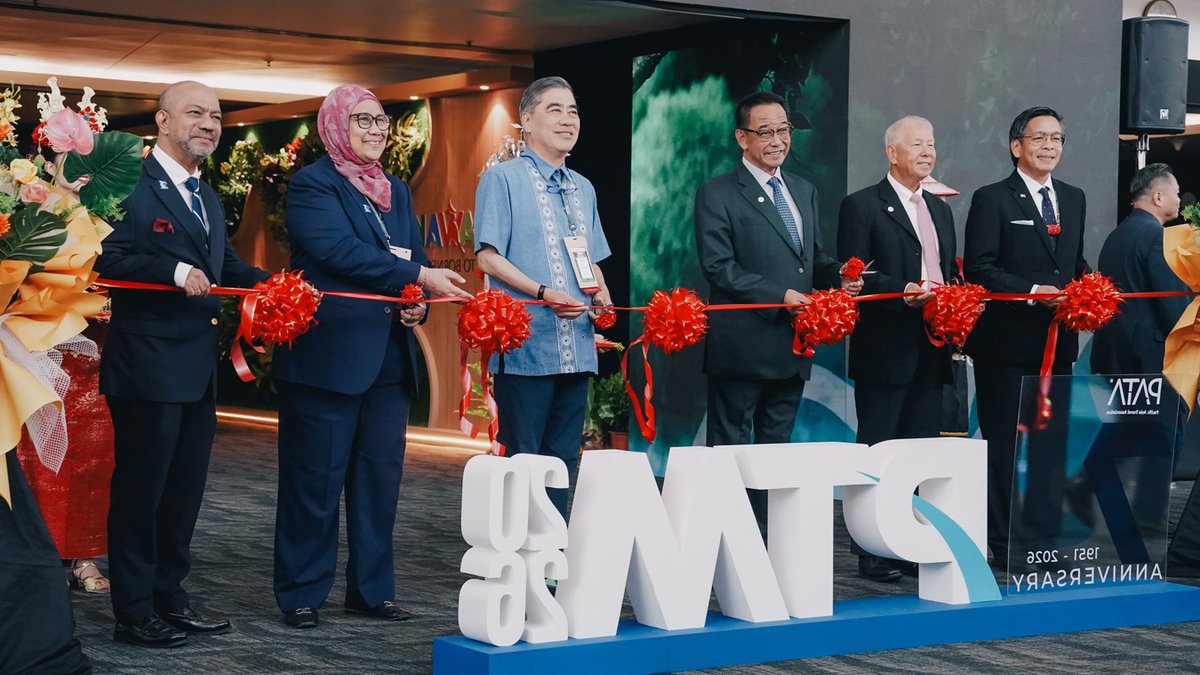
The 75th edition of the PATA Travel Mart concluded in Kuching, the capital of Sarawak, Malaysia, from August 18 to 20. This marked the first time the major trade event has been held in the state. The three-day gathering pulled together 1,100 tourism delegates from 48 countries and destinations. Alongside them were 221 buyers and 365 sellers looking to connect in person.
The event kicked off with the PATA Knowledge Forum, themed around “The Next Era: Impactful Partnerships, Purposeful Growth.” Attendees spent a full day listening to talks on opportunities and challenges shaping the future of tourism. Topics ranged widely, covering artificial intelligence, sustainability, and digital transformation.
It served as a chance for the industry to pause and discuss where things are heading.
A New Home for the Trade
Henry Oh, the recently appointed Chairman of PATA, described Sarawak as his “second home” outside of Korea. He explained that the state’s rich cultural heritage, diverse communities, and stunning natural scenery made it the ideal host for PATA 2026. His comments set the tone for a week focused on connection and growth.
Speaking during the opening ceremony, Oh noted that for the past three quarters of a century, PATA has brought people together across Asia, the Pacific, and further afield. He said the industry is evolving rapidly, driven by changing traveler expectations, technology, and shifting markets. “The conversations we have today will shape future partnerships and opportunities,” he stated.
Dr Sharzede Datu Haji Salleh Askor, Chief Executive Officer of the Sarawak Tourism Board, said the region was honoured to host one of the industry’s most important marketplaces. She emphasized that the event gives Sarawak a platform to showcase itself directly to the international travel industry. Delegates get to experience the destination away from the exhibition floor.
“Sarawak is home to 34 ethnic communities, each with their own traditions, languages, music, crafts, and culinary heritage,” she said. “Together with our ancient rainforests, spectacular caves, majestic rivers, lively festivals, and exceptional cuisine, we offer visitors an authentic destination, where there is always something new to discover.”
Numbers on the Ground
Following the forum, the main mart took place at the Borneo Convention Centre Kuching on August 19 and 20. Stands from destinations like Oman, Guam, Jordan, Berlin, Nepal, Russia, and the Maldives filled the halls. Buyers, sellers, and media representatives scheduled appointments and explored stalls selling local delicacies and crafts.
Related Post: Malaysian Heritage Journeys Offer Merdeka Travel Deals
Dato Sri Abdul Karim Rahman Hamzah, the Honourable Minister of Tourism, Creative Industry & Performing Arts, Sarawak, highlighted that tourism is on the rise within the state. He pointed to recent financial data to illustrate the scale of the industry’s impact.
For the last two years, tourism has brought an average of one billion Malaysian ringgit per month to Sarawak. Between January and June 2026, the state welcomed over two million international arrivals. A large majority of these visitors came from Brunei, with others arriving from Central Asia, Europe, India, and China.
Expanding Reach and Connectivity
As part of efforts to enhance tourism, the minister announced plans to expand Kuching’s direct international flights to the island of Jeju, Korea. Dr Sharzede added that direct flights to India through Air Borneo are also in the pipeline. The tourism board is running a total of 92 separate initiatives in 2026 alone to support this growth.
PATA CEO Noor Ahmad Hamid noted that one of the organisation’s key aims is to promote smaller and lesser-known destinations. He observed that events like this prove PATA makes an effort to go to its members rather than waiting for them to come to established hubs.
“Of course, choosing to host PTM 2026 in Sarawak was a calculated risk as it’s not a direct destination and most attendees had to change flights in Kuala Lumpur,” Hamid said. “But, by taking PTM beyond the region’s traditional gateways, we are deliberately opening international markets to smaller and emerging destinations, helping disperse tourism, broaden economic opportunities and show that the next generation of tourism growth can come from beyond the established hubs.”
Evenings in Borneo
After the travel mart concluded, attendees were encouraged to join complimentary tours to experience the destination firsthand. These excursions included a visit to the 28 semi-wild orangutans at Semenggoh Wildlife Centre. Visitors are welcome twice a day at feeding times.
Other options included a gastronomy tour featuring a local market visit and cooking demonstration. There was also a trip to the ‘fairy cave,’ famous for its dramatic limestone rock formations, and an eco-friendly bike tour of the city of Kuching.


